 |
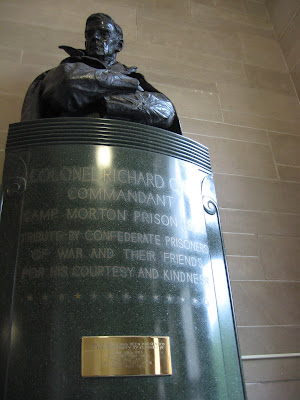
Figure 1. Monument of Col. Owen in entrance to IMU.
(Photograph by Derek DiMatteo) |
Standing just inside the central entrance to the Indiana
Memorial Union (IMU), this monument commemorates Colonel Richard Owen for his
role as Commandant of Camp Morton Prison in 1862. My encounter with this
monument on 2012.09.02 was entirely accidental, never having used this entrance
to the IMU before, and only entering by virtue of its immediacy as I tried to escape
the rain and go in search of a computer lab. The towering monument’s commanding
presence within the vestibule arrested me. I felt compelled by the tall dark marble
base, by the figure’s folded arms and draped cloak, by the contrast between his
benevolent but worn face and his powerful forearms. I read the inscription,
which declares the moment to be a “tribute by confederate prisoners of war and
their friends for his courtesy and kindness.” I was surprised, never having
seen a monument in honor of a prison camp commandant before, let alone a
monument of thanks to such a man, made even more striking because it was the prisoners
who were paying tribute “for his courtesy and kindness.” I knew nothing of the
history of Camp Morton, neither where it had been nor what had happened there,
but I felt the monument demand that I admire this person, this Colonel Owen,
despite my ignorance. And I did feel some admiration for him, but I wasn’t sure
why, other than the sense that we should probably all admire the virtues of
courtesy and kindness. The brass plaque reads: “This replica has been presented
to the University by classes of 1910, 1913, 1915, 1916, 1917, 1918, 1919, 1920,
1922, 1923, 1924, 1926, 1927, 1928, 1929, 1930, 1931.” It was clear that the
committee members of those graduated classes had felt strongly enough about
Colonel Owen and what he did to commemorate him. I gazed up at the figure of
Colonel Owen and wondered what kind of man he really was, what kind of things
he did, and whether I could trust the monument and the judgment of those
graduated students. Then I remembered our assignment, and I snapped some
photos.
At home, later, I tried to analyze this monument. The title
of Joseph Roach’s book, Cities of the
Dead, suggests one way to broaden our understanding. Our cities and towns
are full of sites and monuments commemorating the dead, their deeds, and historical
events. Taken to the Marxist extreme, any man-made structure or product could
be considered a monument to the labor (people and power) that created it. Therefore,
in addition to commemorating Colonel Owen and the thankful Confederate prisoners,
this monument in the IMU also commemorates all of the graduated classes listed
on the brass plaque (who presumably commissioned the project) as well as all of
the laborers who actually produced the monument. The laborers themselves are unmentioned,
uncredited, and are thereby rendered invisible and perhaps forgotten, which is
ironic because of the insistence on remembrance that every monument demands.
One function of commissioning a monument as a gift or of
donating money toward a campus improvement project is for the people making the
donation to leave something of themselves behind for future students and
members of the university community to see and remember them by. In this case,
the classes listed on the plaque will be remembered, if only in the nameless,
collective sense, by those who enter the IMU at that location and who also stop
to read the plaque. (But what of the missing classes of 1911, 1912, 1914, 1921,
1925? Did they not approve of the choice of subject, or were their members
unable to contribute money due to poverty or death?) The monument could be
interpreted as an act of “surrogation” which those classes committed in an
effort to fill an “actual or perceived vacanc[y] in the…social fabric” (Roach, 2).
In other words, the graduated students of those classes felt the need to remind
the university community of the importance of “courtesy and kindness.” It’s
unclear what year this monument was created and installed in the IMU, but perhaps
the surviving representatives of those graduated classes felt the virtues of
courtesy and kindness were fading away in the later 20th century. If
so, how does this affect the spectator, the one who gazes at the monument?
According to Guy Debord, “the spectator’s alienation from and submission to the
contemplated object” occurs through the inverse relationship between contemplation
and life: “the more readily he recognizes his own needs in the images of need
proposed by the dominant system, the less he understands his own existence and
desires. … the individual’s own gestures are no longer his own, but rather
those of someone else who represents them to him” (Debord, 30). In the case of
this monument, is the spectator being told the world needs more kindness and
courtesy? Or is it more specifically exhorting us through commemorative example
to be kind and courteous toward our vanquished foes? Again, I wonder when this
monument was built and installed in the IMU, for knowledge of the historical
moment would surely alter our understanding.
Finally, I would
like to draw attention to the word “replica” in the plaque, which signifies the
monument is not original; i.e., there is an original someplace else. Again, we
are not told where or when or why. One might make guesses about all these
mysteries. IU being a state institution, my guess is that Camp Morton is
located somewhere in Indiana. The original monument is probably located at either
the site of the old camp or else somewhere in the state capitol building in
Indianapolis. The date of the original must be sometime after the Civil War
ended (too easy? Okay, let’s say it was created during the war’s
semi-centennial between 1910-1915). More seriously, this blog entry has been
written without checking the history records, since I wanted to keep my
analysis true to what I knew at the time I first encountered the monument. (I
have since done some elementary research to learn more about Colonel Owen and
Camp Morton, but still remain ignorant of many facts about the monument.)
 “How true it is, that
it is too late to catch the living form and face of our dear friends, and well
illustrates the necessity of procuring those more than life-like resemblances
of our friends, ere it is too late— ere the hand of death has snatched away those
we prize so dearly on earth.”
“How true it is, that
it is too late to catch the living form and face of our dear friends, and well
illustrates the necessity of procuring those more than life-like resemblances
of our friends, ere it is too late— ere the hand of death has snatched away those
we prize so dearly on earth.”
